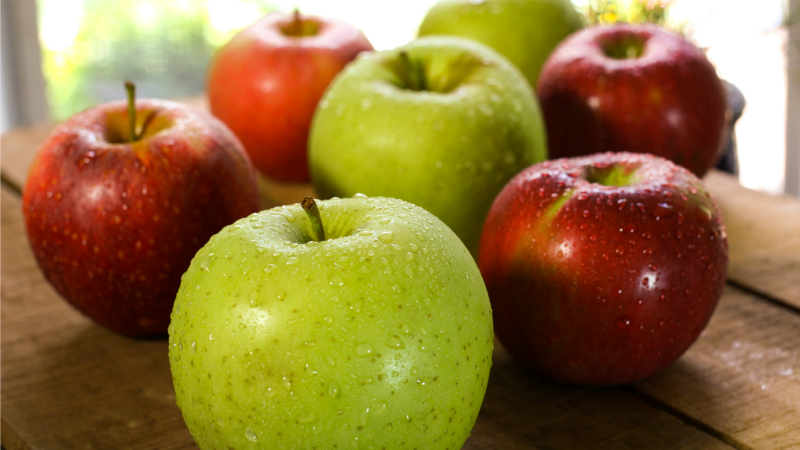
At first become flushed, apples may appear to be entirely exhausting (that is the organic product that got humanity removed from heaven?) however a flawlessly fresh, sweet and tart apple, straight from the tree, is a lovely thing—yet every assortment has its qualities and employments.
There are a huge amount of apples out there, and you shouldn't be reluctant to get out there and investigate every single one. In the event that the sum total of what you've had is Red Delicious (more like "Red Dumbface" am I right?), you are passing up a great opportunity, old buddy. Next time you wind up at the market, check the sorts of apples. In case you're at a supermarket, there will most likely be four or five, however the agriculturist's market? You will discover many apples, truly tens. (As in like, 10-20.) The qualities that make one sort of apple extraordinary for eating insane (sensitive, new flavor and bunches of juice) can make it not as much as perfect in a pie (otherwise known as "mush city").
In any case, just like the case with numerous culinary inquiries, there is now and again more than one "right" answer, and individual inclination can trump experimental information. (For example, my mom cooks her Brussels grows until the point that they are mush. Is this off-base? Indeed, it is a wrongdoing against Brussels grows, yet hollering Alton Brown quotes at her wouldn't change her inclination.) So, rather than addressing you on what apples you "should" be eating, preparing, and drinking, I will arm you with the information that how about we you settle on better apple decisions, in light of the fact that "the more you know" applies even to apples.
So Fresh, So Crisp: Galas, Honeycrisps, and Fujis for Snacking
Apples are, potentially, the most effortless nibble on the planet. You don't need to peel them; just wash and get to eating. Not all assortments are appropriate for crisp eating, however. The ideal apple ought to be an adjust of new sweetness and splendid causticity, with fresh, succulent fragile living creature and that particular "appley" fragrance conveyed to us by esters. Fundamentally, the inverse of the coarse, one-note, dumb inept Red Delicious.
As indicated by sustenance author Harold McGee, the best "pastry" or "eating" apples have a pH of 3.4 and are around 15% sugar. This isn't the most valuable data (unless you have a type of sustenance research facility taken cover behind your bookshelf), yet it is intriguing. So which ones would it be advisable for you to purchase for placing straightforwardly into your wonderful mouth? As per this lovably simple you-pick site that I've been fixated on for quite a long time, the best new apples are Gala, Honeycrisp, Cameo, Pink Ladies and Fuji. These are the apples you need on your cheeseboards, old buddy. They don't demonstrate Granny Smith (which can have a pH of 3.3-3.9) much love, yet in the event that you're similar to me and adore yourself a tart apple, you truly can't turn out badly with the Granny. (Reward: sprinkle somewhat salt on there. I don't know why yet my grandma salts basically every last bit of her products of the soil truly takes it to a tasty place. My grandma is a virtuoso.)
Get Baked: Golden Delicious for Desserts
When cooking apples, you're searching for two things: something that won't separate into a soft chaos, and something that will keep up its flavor. I don't know that there's one single immaculate preparing apple, however most ensured apple experts™ would concur that the Golden Delicious approaches.
In an exceptionally broad (and extremely delectable) pie think about directed over at Serious Eats, the considerable J. Kenji Lopez-Alt found that apples of this assortment had an awesome sweet and tart, rich flavor, yet that they were marginally ailing in the surface division. All things considered, he gave the Golden a 8 out of 10, which is an extremely respectable rating originating from a man of such demanding taste and sentiments. (Think about what the moronic Red Delicious got? A "1"! Suck it, Red D.)
You may think the arrangement is as basic as blending in a firmer, less delightful apple, however with regards to pies, Kenji is a one-apple man, depicting pies with two apple assortments as "a pie that is got decent firm lumps of apple mixed with darker apple mush." Instead, he firms the Goldens up by standard cooking them to change over the pectin (the organic product "stick" that enables the apple to keep its shape) into a more warmth stable frame, keeping fluid from spilling out and transforming your pie into a soupy wreckage:
(You can likewise reinforce pectin's bonds by including lemon juice—pectin improves the situation in acidic conditions—yet you'll wind up with a lemony pie, which may approve of you.)
Obviously, there are different schools of thought on blending apples. America's Test Kitchen is an aficionado of apple mush, and their formula depends on the McIntosh's textural propensities to give "a decent, delicious base for the harder Grannies." Don't know who to trust? Make both and see which you like better. It ought to be noted, notwithstanding, that ATK's formula was designed to be made with apples you can get at any market whenever of the year, while Kenji's is intended to be made amid Golden Delicious season, ideally with apples you've picked yourself hours prior, so perhaps spare the ATK pie until the point when the finish of apple season.
Obviously, nobody is stating you can't try different things with your own particular apple blends. Need to perceive how an apple will hold up without preparing a whole pie? Test them out à la McGee (he gives us so much) and wrap a couple of cuts in thwart and heat for fifteen minut
es, or microwave them wrapped in plastic wrap until the point that the plastic inflatables load with steam